Aviamasters speeds turbo pacing: four modes and session tempo

In this piece
- Four gears in the interface
- What switching pace cannot touch
- Rounds per hour: the honest spread
- The real cost of turbo
- Choosing a pace deliberately
Speed is the only control Aviamasters lets you touch mid-flight, which is exactly why it collects more mythology than the rest of the interface combined. Queries about aviamasters speeds turbo pacing usually arrive with a companion question — "which speed wins more often" — and the honest answer is flat: none of them. What the switch genuinely changes is tempo, and tempo has its own consequences: rounds per hour, bankroll burn, the attention you have left at the end of a session. This piece walks the four modes, the honest boundary of what is publicly documented about them, and where turbo earns its keep or wastes your evening.
Four gears in the interface
The rulebook's description is about as spare as it gets: flight speed is regulated with four buttons, a tortoise, a man, a hare and a lightning. The default is speed 2, the walking man, and the change can be made during the round — the flight does not restart, the counter does not reset, only the pace of the animation compresses or stretches. The naming does most of the explanatory work: tortoise is the readable slow lane, hare is the brisk middle, man and lightning bracket the working range between them.
| Gear | Position | Pace per the text |
|---|---|---|
| Tortoise | 1 | slow, every event legible |
| Man | 2 | default |
| Hare | 3 | middle, short series |
| Lightning | 4 | several times more rounds per hour |
Mechanically, all four gears play out the same flight. The events of the round — pick-ups, rockets, the landing — are already written; the speed setting decides how much wall-clock time that written sequence takes to present itself. There is no hidden fourth "turbo game" with separate payouts behind the buttons.
What switching pace cannot touch
Three layers stay put regardless of the gear. The content of the flight is unchanged: the rules describe boosts, numbers, multipliers and rockets with no wiring to tempo. The specifications are unchanged: 97% declared RTP, low volatility, an x250 ceiling and EUR 250,000 top payout belong to the game as a product, not to any preset. And the loss condition is unchanged: lightning cannot dodge a rocket, and it cannot dodge the water either — the same ending criteria apply across all four knobs.
Two working conclusions fall out of that. Any claim about a "winning speed setting" describes a game that does not exist — one mathematics powers all four buttons. And switching speed mid-round does not recalculate or peek at anything, because the round's result is written by the landing, not by the animation speed.
Rounds per hour: the honest spread
Here is where this editorial prefers accuracy to a convenient figure. The provider does not publish per-mode round durations. The rulebook names the four modes and stops there; no seconds appear anywhere in the official documentation. Third-party write-ups disagree with each other by large factors — from "a few seconds per round" on lightning to tens of seconds on the slow end — and each of those figures is somebody's personal stopwatch session, not a specification.
What is safe to assert is the shape of the effect: the gap between tortoise and lightning is multiplicative, so an hour on lightning accommodates several times more rounds than an hour on tortoise. That single fact does most of the practical work: at an identical stake, turnover per hour scales with round count, and so does the rate at which a balance gets re-priced by chance. If a forum quote cites exact numbers like hundreds of rounds an hour, read it as an uncontrolled measurement; the cleanest fix would be BGaming publishing the timings, and until then any exact figure is a personal datum rather than a spec.
The real cost of turbo
Turbo's price tag arrives in three layers. The arithmetic layer: more rounds per hour at the same stake means more turnover, and with a 97% declared return every chunk of turnover carries the same negative expectation — faster play does not raise the return, it multiplies the number of tickets bought. The attention layer: reading a flight is easy on the tortoise and compressed on lightning; when events outpace perception, decisions drift from judgment to habit, and habit is a poor risk manager. The emotional layer: high tempo feeds chasing behaviour after losses; stop conditions exist precisely for that gap.
Autoplay is the only legitimate autopilot here, and the rulebook defines its brakes: stop on any win, stop when a single win exceeds a set value, stop when the cash balance increases by a value, stop when it decreases by one. Configured before the session, those conditions do the work player willpower claims for itself. One more housekeeping clause fits long sessions: unfinished rounds terminate every 24 hours, which matters when a lightning streak gets interrupted mid-flight.
Choosing a pace deliberately
A sensible order of adoption: first run the full timeline of events at tortoise speed until each pick-up is legible; then work up through man and hare on short series; reserve lightning for volume testing of an idea, not for earning an evening. The sequence of the round itself is best learned before pace tuning — how the round works is our stepwise guide for that. And if the tempo discussion keeps pulling you toward the curve-based neighbour with the cash-out button, we put the rhythm of both games side by side in the Aviamasters vs Aviator comparison; the two handle pace in fundamentally different ways.
The closing line applies to every gear: the highest-value settings of a session are not on this four-button strip at all. Time limits and money limits, chosen before take-off and honoured after, remain the one pace control that is genuinely yours — 18+ is not a formality here, because fast rounds test exactly the discipline the age line is meant to protect.
Related materials
Aviamasters how to play: round rules, landing and no cash-out
How a full Aviamasters round actually works: wager, counter balance, boosts, rockets and the…
2026-06-08
Aviamasters demo: free play mode, what it teaches and what it cannot
An honest look at the free Aviamasters demo: BGaming's official PLAY DEMO on virtual credits, and…
2026-06-23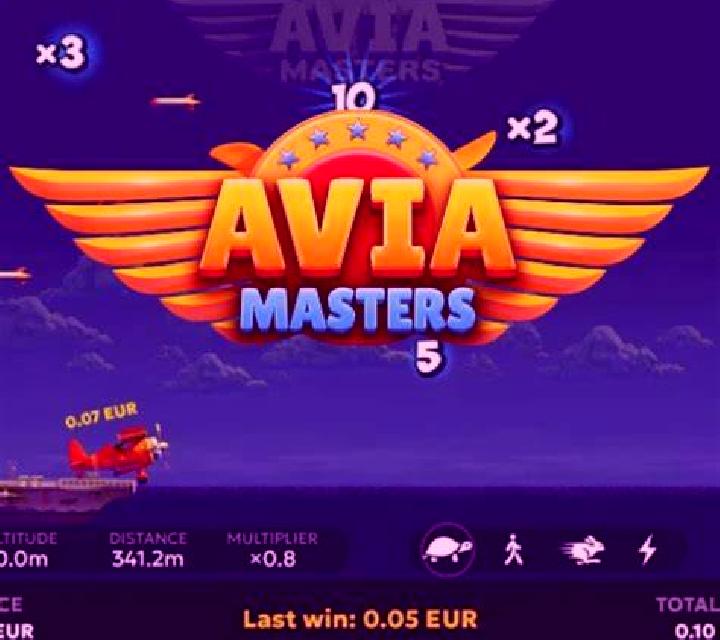
Aviamasters vs Aviator: how the two crash games actually differ
Aviamasters vs Aviator on mechanics: carrier landing versus the crash point, rockets versus a plain…
2026-09-21
Aviamasters 2 boosters guide: Magnet, Laser Gun, Nitro, Life Buoy
What each Aviamasters 2 booster does: Magnet pulls multipliers toward the island, Laser Gun clears…
2026-10-11